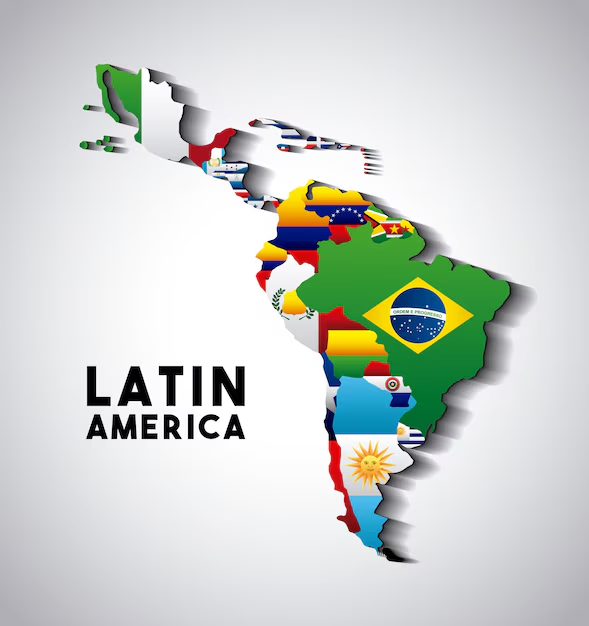
South America's Food Sovereignty Movement: Community-Led Sustainable Agriculture
Updated at: 2025-04-13 02:33:02 (1 year ago by Melkisedeck Leon Shine)
The global pursuit of sustainable food systems is reaching a critical juncture, demanding community control over food production. This has spurred the rise of community-led sustainable agriculture—a movement empowering communities to manage their food production and champion food sovereignty. In South America, this initiative is rapidly gaining momentum, serving as a powerful engine for positive social and economic transformation.
The impact of community-led sustainable agriculture in South America is far-reaching and profound, extending beyond mere food production. Its significance is underscored by the following key aspects:
Self-Determined Food Systems: This approach prioritizes the fundamental right of communities to define their own agricultural and food policies, free from external pressures. This autonomy strengthens local food systems, ensuring that communities retain control over food production and distribution.
Environmental Guardianship: Sustainable practices, including organic farming, agroforestry, and permaculture, are at the heart of this model. These methods protect the environment, conserve biodiversity, and mitigate the impacts of climate change, leading to long-term ecological stability.
Empowering Local Actors: This model empowers individuals and groups by providing them with the tools, knowledge, and resources to cultivate their own food. This fosters self-reliance, reducing dependence on external food sources and enhancing community resilience.
Economic Revitalization: By focusing on local production and consumption, community-led agriculture stimulates local economies. This generates employment opportunities, supports small-scale farmers, and fosters sustainable economic growth within the community.
Preserving Cultural Heritage: Traditional farming techniques and cultural practices are preserved and transmitted across generations. This maintains a vital connection to ancestral knowledge and strengthens cultural identity.
Enhanced Food Security and Resilience: Reduced reliance on external food sources improves food security, particularly in remote or marginalized areas. This builds resilience against supply chain disruptions and fosters greater community self-sufficiency.
Promoting Healthier Diets: Access to fresh, nutritious, locally-grown food directly contributes to improved public health. This promotes healthier dietary habits and reduces reliance on processed foods.
Strengthening Community Bonds: Collaborative participation in community-led agriculture fosters social cohesion, strengthening community bonds and creating a strong sense of shared purpose and belonging.
Investing in Human Capital: Hands-on learning and skill development opportunities empower individuals to effectively manage their food production. This enhances self-sufficiency and creates a skilled workforce capable of adapting to changing circumstances.
Participatory Decision-Making: Community-led agriculture embraces participatory governance, ensuring that community members have a direct voice in shaping policies and practices affecting their lives and livelihoods.
Fostering Innovation and Collaboration: The sharing of knowledge, expertise, and resources among community members creates a culture of innovation and collective learning. This leads to continuous improvement and the adoption of best sustainable practices.
Building Resilience to External Shocks: Strengthening local food systems enhances community resilience against external shocks such as natural disasters or economic instability. This ensures greater stability in food production and access.
Sustainable Land Stewardship: Sustainable farming methods are crucial for protecting and conserving land resources. These methods prevent soil degradation and deforestation, promoting environmentally responsible land use practices.
Celebrating Cultural Diversity: The integration of traditional farming techniques and local food varieties celebrates South America's rich cultural tapestry, preserving and promoting cultural heritage within the community.
Building Continental Collaboration: Community-led sustainable agriculture facilitates collaboration and knowledge exchange between communities across the Americas. This fosters solidarity and a shared commitment to sustainable food systems across the continent.
In conclusion, community-led sustainable agriculture is a transformative force in South America, driving food sovereignty, environmental sustainability, and social progress. By empowering local communities, preserving cultural heritage, and fostering collaboration, this movement has the potential to revolutionize food systems, building a more equitable and resilient future for all. Support this movement and help build a stronger, more sustainable future. Share this story to inspire others to join the effort!
Updated at: 2025-08-22 10:23:47 (11 months ago by Melkisedeck Leon Shine)
```htmlIn our increasingly interconnected global landscape, the importance of international collaboration cannot be overstated, particularly when addressing transnational health challenges. Health diplomacy, defined as the synergistic intersection of health and foreign policy, becomes paramount. The Americas, sharing geographical proximity, deeply interwoven economies, and constant cross-border interactions, are uniquely positioned to champion health diplomacy. This necessitates fostering cooperation, mutual understanding, and concerted action to address public health crises effectively. By promoting collaborative action and fostering mutual understanding, the American nations can create a healthier and more resilient future for the whole continent.
The COVID-19 pandemic served as a stark reminder of the potential devastation caused by unchecked infectious disease outbreaks. Effective pandemic preparedness and response hinge on seamless information sharing, coordinated strategies, and, critically, equitable access to essential resources such as vaccines and treatments. This demands a high degree of international cooperation and collaboration among nations, reflecting the core tenets of Cross-Cultural Communication and understanding.
International organizations are vital in coordinating responses to public health emergencies. Organizations such as the World Health Organization (WHO), the Pan American Health Organization (PAHO), and the Centers for Disease Control and Prevention (CDC), play an indispensable role. These entities offer expertise in technical assistance, facilitate knowledge sharing, and mobilize resources, which are all crucial for bolstering national capacities and fostering regional collaboration. This aligns with the principles of collaborative governance, where multiple stakeholders work together to achieve common goals. Their expertise in technical assistance, knowledge sharing, and resource mobilization is crucial for strengthening national capacities and fostering regional collaboration. Their guidance and support are essential for effective responses.
Strengthening cross-border collaboration is a cornerstone of effective health diplomacy. Building robust surveillance systems enables early detection of potential threats. Establishing early warning mechanisms allows for proactive responses, and developing joint emergency response plans ensures a coordinated approach. Sharing resources, expertise, and best practices among North and South American nations leads to a more efficient and effective response to emerging public health threats. For instance, joint training exercises could simulate pandemic scenarios, improving the preparedness of healthcare professionals across borders. Such collaborative efforts are also key to building strong global relationships.
Regional health initiatives provide essential frameworks for multinational cooperation. The North American Plan for Animal and Pandemic Influenza (NAPAPI), for example, focuses on pandemic preparedness, response, and recovery, establishing a common framework for action and resource allocation. Such initiatives should be expanded and adapted to address a broader range of public health threats, ensuring a coordinated and impactful response across the region.
Equitable vaccine access and distribution are fundamental pillars of global health security. North and South American countries must collaborate to address disparities in vaccine availability, prioritizing vulnerable populations and ensuring all communities have access to life-saving immunizations. Strategies for achieving this could include establishing regional vaccine procurement mechanisms, technology transfer agreements to boost local vaccine production, and targeted outreach programs to address vaccine hesitancy. Addressing vaccine inequities is vital for comprehensive health security.
Openly sharing successful strategies, lessons learned, and challenges encountered is crucial for continuous improvement. This involves creating platforms for regular dialogue among health officials, researchers, and policymakers from different countries. Case studies of successful interventions, as well as transparent reporting of failures, can provide valuable insights for refining approaches to public health. This knowledge exchange is essential for progress and contributes to the growth through mistakes
Robust and resilient health systems are the bedrock of effective public health. Collaborative investments in infrastructure, resource allocation, and knowledge exchange are essential for strengthening healthcare capacities across the Americas. This includes supporting the development of primary care networks, enhancing laboratory capacity for disease diagnosis and surveillance, and training healthcare professionals in public health emergency management. Investing in health systems is investing in a healthier future.
Health diplomacy must actively address existing health inequalities, acknowledging that marginalized and vulnerable populations are disproportionately affected by public health crises. Prioritizing equitable access to healthcare and resources ensures that everyone benefits from advancements in global health security. Strategies could include targeted interventions to address social determinants of health, such as poverty, food insecurity, and lack of access to clean water and sanitation. Leaving no one behind is paramount, and this aligns with ethical frameworks such as the principle of distributive justice.
Joint exercises, training programs, and consistent knowledge sharing enhance nations' preparedness and responsiveness to public health emergencies. These collaborative efforts build capacity and strengthen collective capabilities for effective crisis response. For example, joint field simulations could be conducted to test emergency response plans and identify areas for improvement. Preparedness is key to effective response.
Investing in collaborative research efforts fuels innovation in disease prevention, treatment, and preparedness. Joint research initiatives between North and South American countries can accelerate advancements in understanding disease mechanisms and developing effective countermeasures. This could involve establishing regional research consortia, funding joint research projects, and facilitating the exchange of researchers and data. Collaboration fuels innovation.
The active participation of civil society organizations and the private sector is crucial for a holistic approach to health diplomacy. Their diverse perspectives, resources, and expertise enrich strategies and contribute to more effective outcomes. This includes engaging NGOs in community-based health promotion programs, partnering with private sector companies to develop and distribute essential medical supplies, and involving patient advocacy groups in policy discussions. A multi-stakeholder approach is essential.
Technology plays a vital role in enhancing surveillance, information sharing, and access to healthcare. Leveraging telemedicine, real-time data analysis, and other technological advancements can significantly improve responsiveness to public health threats. This includes developing mobile health applications for disease surveillance, using artificial intelligence to analyze epidemiological data, and expanding access to telemedicine services in remote areas. Technology is a crucial tool, and its effective deployment requires addressing issues such as data privacy and digital literacy.
Trust and mutual support are fundamental to successful health diplomacy. Open communication, transparency, and a shared commitment to regional health security are essential for building strong relationships and overcoming challenges collaboratively. This involves establishing clear communication channels among countries, sharing data and information in a timely manner, and fostering a culture of mutual respect and understanding. Trust is the bedrock of collaboration.
Each individual plays a crucial role in strengthening health diplomacy. Staying informed, advocating for equitable access to healthcare, and supporting collaborative initiatives contribute to a healthier and more unified Americas. This includes promoting vaccination, practicing good hygiene, and supporting policies that advance health equity.
In conclusion, addressing contemporary challenges in international relations and cooperation within the Americas necessitates a united front built on shared responsibility and unwavering collaboration. By embracing the principles of health diplomacy, the nations can effectively respond to pandemics and other public health threats, build resilient health systems, and foster equitable access to healthcare for all. To further enhance health diplomacy in the Americas, several recommendations can be made. Firstly, there should be an increased investment in strengthening health systems across the region, focusing on infrastructure, workforce development, and technology. Secondly, establish more robust mechanisms for cross-border collaboration, including joint training exercises, data sharing agreements, and coordinated emergency response plans. Thirdly, prioritize addressing health inequalities by implementing targeted interventions to reach marginalized and vulnerable populations. Lastly, promote greater engagement of civil society organizations and the private sector in health diplomacy initiatives, leveraging their expertise and resources.
The impacts of effective health diplomacy extend beyond mere disease control. It fosters stronger international relations, promotes economic stability, and enhances social cohesion. The applicability of these principles is not limited to the Americas; they can be adapted and applied in other regions facing similar public health challenges. Further research is needed to evaluate the effectiveness of different health diplomacy strategies and identify best practices for promoting collaboration and addressing health inequalities. By working together, the Americas can create a healthier, more unified, and more resilient future.
Let us work together to create a healthier, more unified, and more resilient future for the Americas.
Questions for Reflection:
Together, we can build a healthier and more united future for the Americas.
Related Articles:
Reader Pool: How can digital diplomacy further enhance health diplomacy efforts in the Americas, particularly in rapidly disseminating critical information during a public health crisis?
```

Updated at: 2025-03-01 13:43:31 (1 year ago by Melkisedeck Leon Shine)
```htmlTransnational crime poses a significant threat to the security and prosperity of South American nations. Its borderless nature demands a unified, collaborative response that transcends national boundaries. This article explores the evolving landscape of regional security cooperation, emphasizing the crucial role of partnerships in tackling this multifaceted challenge.
The complex web of transnational criminal activities, including drug trafficking, human trafficking, and money laundering, necessitates a concerted, multinational effort. These sophisticated networks exploit vulnerabilities within national systems, undermining the rule of law and harming communities across the region. The interconnectedness of these crimes underscores the urgent need for collaborative strategies and shared resources.
Strategic alliances are the cornerstone of effective counter-crime strategies. These partnerships facilitate the exchange of critical intelligence, specialized expertise, and essential resources, significantly improving the effectiveness of law enforcement efforts. By pooling resources and coordinating actions, nations can proactively disrupt criminal networks and bring perpetrators to justice, enhancing regional security.
Regional organizations, such as the Organization of American States (OAS) and the Union of South American Nations (UNASUR – while currently inactive, its legacy remains relevant), play a vital role in fostering these alliances. These platforms facilitate dialogue, collaboration, and the development of coordinated strategies. Their contributions in building trust and mutual understanding are crucial for the success of joint operations and information sharing.
Effective intelligence sharing is paramount. The timely exchange of information allows for proactive identification of emerging threats and the disruption of criminal activities before they inflict significant damage. This predictive approach is far more effective than reactive measures alone, maximizing efficiency and minimizing harm.
Joint law enforcement operations are indispensable. Coordinated actions enable law enforcement agencies to effectively target and dismantle transnational criminal organizations, disrupting their supply chains and undermining their infrastructure. This collaborative approach optimizes resource utilization and expertise, maximizing impact and efficiency.
Robust border security is critical to curtail the flow of illicit goods and individuals. This requires a multi-faceted approach, integrating advanced technologies, enhanced intelligence sharing, and collaborative border patrols. Investing in cutting-edge security technologies and comprehensive training programs is vital for maintaining a strong border security posture.
Disrupting the financial networks that fuel transnational crime is equally crucial. Strengthening financial regulations and promoting international cooperation in combating money laundering are essential steps in choking off the lifeblood of these criminal enterprises. This requires a firm commitment to transparency and accountability within regional financial systems.
The drug trade remains a significant challenge, demanding a comprehensive regional response. Collaborative efforts are needed to disrupt trafficking routes, dismantle drug cartels, and reduce the availability of illicit narcotics. A holistic approach addressing both supply and demand is necessary for sustained impact.
Combating human trafficking requires a multi-pronged approach encompassing prevention, prosecution, and victim support. Joint efforts to identify and dismantle trafficking networks are crucial, alongside the establishment of robust support systems for victims. This involves strengthening legal frameworks and ensuring access to essential resources for survivors.
Cybersecurity cooperation is increasingly vital, as criminal networks leverage technology to facilitate their illicit activities. Protecting critical infrastructure and combating cybercrime demands a collaborative approach, with nations sharing best practices and expertise to mitigate cyber threats.
Investing in the capacity building and training of law enforcement agencies is a long-term investment in regional security. Providing specialized training, equipping agencies with advanced technologies, and promoting best practices enhances the overall effectiveness of law enforcement across the region.
Engaging civil society is crucial. Their local knowledge, insights, and advocacy efforts are invaluable in addressing the root causes of crime and ensuring that security initiatives are both effective and equitable. Inclusive partnerships that integrate civil society perspectives lead to more sustainable and impactful solutions.
The fight against transnational crime in South America strengthens regional unity, fostering a shared sense of responsibility and collective action. This collaborative spirit builds resilience and enhances the region's ability to overcome shared challenges, leading to a more secure and prosperous future.
Individual citizens can contribute significantly by staying informed, advocating for stronger security partnerships, and supporting initiatives that promote regional unity and cooperation. Collective action is paramount in building a safer and more secure future for South America. Let us all work together to build a stronger, more secure region for generations to come.
How can we further enhance collaboration and cooperation among South American nations in the fight against transnational crime? Let's engage in a constructive dialogue to address this critical challenge. #SouthAmericaSecurity #TransnationalCrime #RegionalCooperation
```
Updated at: 2024-03-03 13:23:41 (2 years ago by Melkisedeck Leon Shine)
Arts and Culture as Catalysts for Social Change: North American Case Studies In today's rapidly changing world, the power of arts and culture to drive social change has never been more evident. Throughout North and South America, communities are harnessing the transformative energy of the arts to address contemporary issues in community and social development, promoting unity and positive change. In this article, we will explore 15 inspiring case studies that highlight the tremendous impact of arts and culture as catalysts for social change in North and South America.
Updated at: 2025-05-17 15:23:00 (1 year ago by Melkisedeck Leon Shine)
The global energy transition, characterized by a shift away from fossil fuels towards sustainable alternatives, necessitates unprecedented levels of international cooperation. South America, possessing significant renewable energy resources, is uniquely positioned to spearhead this transition. This article examines the crucial role of regional collaboration in achieving energy security, mitigating climate change impacts, and fostering economic development within a South American context, leveraging relevant theoretical frameworks such as the Resource Curse theory and the theory of comparative advantage.
Harnessing Renewable Energy Potential: South America's wealth of untapped renewable energy potential—solar, wind, hydro, and geothermal—presents a unique opportunity for energy independence. This abundant resource base can be analyzed through the lens of the Resource Curse theory, which suggests that an abundance of natural resources can paradoxically hinder economic development if not properly managed. However, in this case, strategic resource management and international cooperation can mitigate this risk, transforming the abundance of renewable resources into a catalyst for sustainable growth. Development of this potential offers significant opportunities for economic diversification, job creation in green sectors, and reduced reliance on volatile fossil fuel markets, aligning with the principles of sustainable development.
Energy Security and Climate Change Mitigation through Regional Cooperation: Diversifying energy sources by investing in renewable energy infrastructure significantly enhances energy security, reducing vulnerability to global price shocks and supply chain disruptions. This aligns with the principles of portfolio diversification in finance, reducing systemic risk by spreading investments across various sources. Concurrently, this renewable energy transition dramatically curtails greenhouse gas emissions, playing a crucial role in mitigating climate change according to established climate models and principles. This collaborative approach promotes environmental sustainability, benefiting the entire region.
Economic Growth and Regional Integration: The development of renewable energy infrastructure stimulates economic growth across numerous sectors, generating “green jobs” and attracting foreign direct investment (FDI) (Porter’s Diamond Model). North and South American nations can maximize these economic gains through collaborative infrastructure projects, knowledge-sharing initiatives, and technology transfer, fostering regional economic integration and strengthening international ties. This synergy is well-explained by the theory of comparative advantage, where nations specialize in areas where they have a relative advantage, leading to greater overall efficiency and economic gains through trade and collaboration.
Infrastructure Development and Interconnected Grids: Interconnecting national energy grids enhances regional energy security by facilitating resource sharing during periods of peak demand or supply shortages. This requires substantial investment in modernizing infrastructure, a challenge most effectively addressed through joint initiatives leveraging pooled resources and expertise. Such collaborations accelerate renewable energy infrastructure development while improving efficiency and reducing costs, leveraging economies of scale.
Technological Innovation via Joint Research and Development: Joint research and development efforts drive technological innovation in renewable energy technologies. Collaborative knowledge sharing and resource pooling accelerate breakthroughs in energy efficiency, storage, and generation. This shared pursuit of innovation positions the region at the forefront of sustainable energy solutions, promoting technological leadership and competitiveness in the global market.
Geopolitical Stability and Social Equity: Reduced fossil fuel dependence minimizes the risk of geopolitical tensions and resource conflicts, fostering regional political stability and enhancing cooperation. Simultaneously, expanding renewable energy access addresses energy poverty by providing affordable and reliable energy to underserved communities, improving living standards, and promoting social equity. This alignment with social justice objectives is crucial for the long-term success of the energy transition.
Resilience and Disaster Risk Reduction: Renewable energy infrastructure exhibits greater resilience to natural disasters compared to conventional energy systems. Investing in distributed generation and resilient grid designs enhances the region's capacity to withstand and recover from extreme weather events, ensuring sustained energy access during crises. This is particularly relevant in regions prone to seismic or weather-related disasters.
Strengthening Multilateral Cooperation Mechanisms: Organizations like the Organization of American States (OAS) and the Community of Latin American and Caribbean States (CELAC) play crucial roles in fostering multilateral cooperation on energy issues. Strengthening these institutions and promoting regional dialogue are essential for policy coordination, regulatory harmonization, and the facilitation of cross-border energy projects. This coordinated approach is vital for overcoming potential barriers to regional integration.
Diplomacy, Capacity Building, and Sustainable Development: Energy cooperation serves as a catalyst for improved diplomatic relations and enhanced international collaboration. Joint energy projects foster trust, strengthen inter-state ties, and create a foundation for broader cooperation in other critical areas. Simultaneously, investing in education and capacity-building programs ensures a skilled workforce capable of managing and sustaining the renewable energy transition, contributing significantly to the goal of sustainable development.
Conclusion and Recommendations: The transition to a sustainable energy future in South America hinges on embracing regional energy interdependence. Harnessing the region's abundant renewable resources and fostering robust collaborative partnerships are crucial for achieving energy security, mitigating climate change, and promoting economic prosperity. This necessitates a concerted effort from governments, businesses, and civil society to collaborate, innovate, and invest in a shared vision of a renewable energy-powered future. Further research should focus on modeling the optimal pathways for regional energy integration, including detailed cost-benefit analyses and assessments of the social and environmental impacts of different renewable energy deployment strategies. Moreover, initiatives for knowledge transfer and capacity building are essential to ensure the long-term sustainability of these efforts. The focus on regional cooperation must extend to broader policies for sustainable development, ensuring the equitable distribution of benefits and mitigating potential risks.
Reader Pool: What are the key socio-political challenges that could hinder the successful implementation of a large-scale renewable energy project in South America, and how can these challenges be addressed through effective policy design and regional cooperation?
Updated at: 2025-05-30 10:16:09 (1 year ago by Melkisedeck Leon Shine)
The global pursuit of sustainable food systems and the critical need for local control over food production have elevated the significance of Community-Led Sustainable Agriculture (CLSA). CLSA empowers communities to autonomously manage their food production, directly contributing to food sovereignty. This model, increasingly prevalent in South America, acts as a powerful catalyst for community development and social progress. This analysis examines CLSA's multifaceted impacts through the lens of several development theories, including Sen's capability approach (which assesses human well-being through expanded choices and freedoms), sustainability theory (emphasizing ecological, social, and economic balance), and the food sovereignty framework (prioritizing community control of food systems). Key concepts analyzed include food sovereignty, resilience, and community empowerment. These concepts, deeply intertwined, are fundamental to understanding CLSA's transformative potential.
Community-led sustainable agriculture presents a transformative approach to food security, environmental sustainability, and social development in South America. Its success stems from its ability to empower communities, fostering self-reliance and resilience while preserving cultural heritage. This analysis, employing various theoretical frameworks, reveals CLSA's positive impacts across multiple dimensions. Future research should explore scaling up successful CLSA models while considering diverse community contexts and incorporating cultural sensitivity. Comparative case studies could evaluate the long-term economic and social impacts of CLSA interventions. Further investigation into the political and institutional factors influencing CLSA effectiveness is needed. Policy recommendations include providing financial and technical support to CLSA projects, strengthening local governance, and integrating CLSA principles into national agricultural policies. This holistic approach is key to unlocking CLSA's potential for a more equitable and sustainable future across South America. A crucial aspect for future research is assessing the long-term impacts of CLSA initiatives through longitudinal studies that track the social, economic, and environmental outcomes of these initiatives across multiple generations. By utilizing mixed-methods approaches that combine quantitative and qualitative data analysis, a more holistic and comprehensive understanding of CLSA impacts can be generated. Moreover, future research should delve deeper into the nuanced interactions between CLSA projects and existing power structures within the communities.
Reader Pool: To what extent does the success of community-led sustainable agriculture initiatives hinge upon fostering effective partnerships between local communities, governmental agencies, and non-governmental organizations?
Updated at: 2025-04-13 02:15:54 (1 year ago by Melkisedeck Leon Shine)
The illicit drug trade casts a long shadow across North and South America, undermining regional security and jeopardizing public health. This pervasive threat demands a unified, collaborative response, transcending national borders and fostering unprecedented levels of cooperation between nations.
South America's historical role as both a source and transit point for illicit narcotics, coupled with the substantial drug consumption in North America, creates a complex dynamic. While past collaborations have yielded some successes, the evolving tactics of drug cartels necessitate a more comprehensive and adaptable strategy. This requires a significant shift towards a truly integrated, pan-American approach.
Addressing the transnational nature of drug trafficking necessitates robust international cooperation. No single nation possesses the resources or capabilities to effectively combat this sophisticated criminal enterprise alone. A coordinated approach, leveraging shared intelligence, resources, and expertise, is paramount to disrupting trafficking networks and dismantling criminal organizations. This requires a paradigm shift from isolated national efforts to a unified, regional strategy.
Joint law enforcement operations, facilitated by open communication and mutual trust, are essential. This includes coordinated intelligence sharing, joint operations to intercept drug shipments, and targeted efforts to apprehend key figures within the trafficking networks. Simultaneously, strengthening border security through advanced technology, best-practice sharing, and comprehensive training for law enforcement personnel is crucial in preventing the cross-border movement of illicit drugs.
Effective counter-narcotics strategies hinge on robust information sharing and intelligence cooperation. Exchanging data on trafficking routes, smuggling methods, and key players allows for more targeted enforcement efforts. Strengthening this exchange, possibly through enhanced regional platforms modeled on successful initiatives, is critical. Furthermore, close judicial cooperation, including extradition treaties and mutual legal assistance agreements, is essential to ensure that criminals face justice. This requires harmonizing legal frameworks across nations to prevent legal loopholes that facilitate evasion.
The vast financial proceeds generated by drug trafficking must be addressed through concerted anti-money laundering measures. Strengthening financial intelligence capabilities and disrupting the flow of illicit funds significantly undermines the profitability of these criminal enterprises.
While supply-side interventions are critical, addressing the root causes of drug demand is equally important. Investing in comprehensive drug education, prevention programs, and readily accessible treatment facilities is crucial in reducing addiction rates. This multifaceted approach directly impacts the market viability of the drug trade itself.
Capacity building and resource allocation in South America remain vital. North American support, through financial assistance, training programs, and technological advancements, can significantly strengthen the capabilities of their Southern counterparts. This shared responsibility ensures a more equitable and effective counter-narcotics effort across the continent.
A truly effective approach requires engagement with civil society, community leaders, and grassroots movements. Empowering local communities, fostering alternative livelihoods, and raising public awareness are vital in creating a culture of collective responsibility. Regional integration platforms, such as the Organization of American States (OAS), provide critical avenues for dialogue, policy harmonization, and coordinated strategies.
Learning from successful international counter-narcotics models, like the Merida Initiative, and adapting them to the specific contexts of North and South America can significantly enhance collaborative efforts. This requires a constant assessment of current strategies and a willingness to adapt and innovate.
Public engagement is paramount. Public awareness campaigns, educational initiatives, and community outreach programs empower individuals to actively participate in reporting suspicious activities and supporting law enforcement. This collective effort builds a stronger foundation for success.
Combating the illicit drug trade demands a united front. Through collaborative action across law enforcement, intelligence sharing, border security, and demand reduction, North and South America can effectively disrupt drug networks and mitigate the devastating social and economic consequences of drug abuse. This is not merely a regional challenge; it is a shared responsibility demanding a unified response. We must collectively work towards a drug-free future for the Americas.
Updated at: 2025-06-07 12:22:02 (1 year ago by Melkisedeck Leon Shine)
The 21st century's hyper-connectivity presents unprecedented challenges to the security and stability of the Americas. Transnational threats—encompassing terrorism, organized crime, cyberattacks, and environmental degradation—transcend national boundaries, demanding a unified and collaborative response. This analysis explores the imperative for enhanced security cooperation across the Americas, outlining key collaborative domains and emphasizing a holistic, multi-faceted strategy. Key concepts underpinning this analysis include: Collective Security, which posits that the security of one state is inextricably linked to the security of all; Complex Interdependence, recognizing the intricate web of relationships influencing security dynamics; and the Resource Mobilization Theory, focusing on the efficient allocation and utilization of resources for collective security outcomes. We will further explore the application of these concepts through the lens of relevant theoretical frameworks like the Security Dilemma, where actions taken to enhance one’s security can inadvertently provoke insecurity in others, and Network Centrality, recognizing the importance of key actors and their interconnectedness in shaping security outcomes.
Strengthening Intelligence Sharing: The Foundation of Collaborative Security
Timely and accurate intelligence exchange is paramount to effective security cooperation. This necessitates the establishment of secure communication channels and the fostering of collaboration among intelligence agencies, applying principles of information asymmetry and intelligence fusion to enhance collective threat preemption and response capabilities. The application of network analysis techniques can identify critical information nodes and enhance information flow across the network of intelligence agencies. The principle of reciprocity in intelligence sharing will be crucial to build trust and sustain long-term collaboration. For example, a real-world application would be the creation of a secure, encrypted platform for sharing real-time intelligence on known drug trafficking routes and individuals involved, enabling timely interventions and disruptive actions.
Combating Transnational Crime: A Regional Law Enforcement Network
Organized crime syndicates exploit vulnerabilities in national legal systems. International collaboration, leveraging principles of deterrence and capacity building, is crucial. This involves strengthening border security, enhancing information sharing through sophisticated data analytics, and implementing joint law enforcement initiatives, modeled on successful international crime-fighting collaborations. The concept of broken windows policing, though initially applied to domestic policing, finds relevance in transnational crime-fighting by targeting minor infractions to disrupt larger criminal networks. An example would be joint task forces targeting money laundering networks and using asset forfeiture to disrupt financial flows of criminal organizations. Capacity-building programs should focus on improving law enforcement training, investigation techniques and forensic capabilities in all participating nations.
Enhancing Cybersecurity Resilience: A Shared Digital Defense Strategy
The digital realm poses significant security risks. Applying principles of layered security and risk management, a robust cybersecurity framework requires shared threat intelligence, collaborative cyber exercises to enhance collective resilience, and investment in cybersecurity education and training. This involves establishing regional cybersecurity centers of excellence and coordinating national cybersecurity strategies. The game theory principle of cooperation in the face of a common threat is essential here – each nation benefits from collective cybersecurity improvements, mitigating the security dilemma often encountered in this domain. For example, regional cyber-security drills simulating large-scale attacks such as coordinated Distributed Denial of Service (DDoS) attacks, would strengthen response mechanisms and improve coordination.
Addressing the Drug Trafficking Crisis: A Holistic Approach
The Americas remain a significant drug transit zone. A regional approach integrating law enforcement with social programs to address both supply and demand is crucial. Employing principles of supply chain disruption and harm reduction strategies requires disrupting trafficking networks, improving interdiction strategies, and bolstering drug rehabilitation and prevention programs. Applying social network analysis to map drug trafficking networks can pinpoint key players and vulnerabilities, allowing for targeted interventions. The integration of public health initiatives like educational campaigns and drug addiction treatment centers is crucial to address the demand side of the problem.
Protecting Vulnerable Populations: Humanitarian and Collaborative Migration Management
Migration requires a humanitarian and collaborative response. International cooperation to combat human trafficking, protect migrant rights, and address migration root causes is essential. The application of human rights frameworks and the principles of international humanitarian law are paramount. This includes establishing effective border control mechanisms while simultaneously providing safe and legal pathways for migration and offering humanitarian assistance. Successful implementation requires strong collaboration among nations, international organizations, and civil society. For instance, joint initiatives supporting refugee camps with access to basic necessities, medical care, and education could offer a humanitarian approach to managing migration flows.
Strengthening Regional Cooperation Mechanisms: Leveraging Institutional Frameworks
Regional institutions, such as the Organization of American States (OAS), provide vital platforms for dialogue, coordination, and strategy development. Strengthening these institutions and empowering them with appropriate mandates is crucial. This involves increasing resource allocation, improving institutional capacity, and fostering a culture of collaboration and consensus-building among member states. The principle of functionalism, which posits that cooperation in specific areas can lead to broader integration, is vital here. For instance, strengthening OAS’s capacity for conflict mediation and preventive diplomacy can enhance regional stability.
Leveraging Public-Private Partnerships: Synergizing Expertise and Resources
Engaging the private sector leverages its expertise, resources, and innovative technological solutions. This collaboration results in a comprehensive approach, allowing for the application of corporate social responsibility principles and public-private partnerships. The private sector can offer advanced technology for border security, data analytics capabilities for intelligence gathering, and innovative solutions for tackling issues such as cybersecurity threats. This collaboration should be framed within transparent legal and regulatory frameworks to ensure accountability and prevent potential conflicts of interest. For example, private companies could provide innovative surveillance technology for border security, while simultaneously adhering to strict regulations on data privacy and security.
Conclusion: A Collective Commitment to Regional Security
Addressing transnational threats demands a collective, collaborative, and comprehensive approach grounded in the principles of collective security, complex interdependence, and resource mobilization theory. By prioritizing security cooperation and implementing a multi-faceted strategy that leverages regional institutions, public-private partnerships, and robust intelligence sharing mechanisms, the Americas can build a safer, more prosperous, and secure future. Further research should focus on developing more effective metrics to measure the success of these collaborative strategies and on exploring innovative solutions to address emerging transnational threats in an increasingly interconnected world. The emphasis should be placed on building strong, resilient, and adaptable security architectures capable of effectively responding to evolving threats and safeguarding the shared future of the Americas.
Reader Pool: Considering the complexities of transnational threats and the diverse capacities of nations in the Americas, what innovative strategies could further enhance the effectiveness of regional security cooperation?
Updated at: 2025-04-13 01:52:43 (1 year ago by Melkisedeck Leon Shine)
```htmlThe interconnectedness of our modern world necessitates collaboration to overcome global challenges. Nowhere is this more evident than in the realm of space exploration, where North American leadership – particularly from the United States and Canada – has significantly propelled international scientific discovery and cooperation. This article examines the substantial contributions of these nations, highlighting the benefits of hemispheric unity and inspiring continued collaboration for the betterment of humanity.
A Legacy of Innovation: Since NASA's inception in 1958, the United States has spearheaded countless groundbreaking achievements, including the Apollo moon landings and the Hubble Space Telescope. Simultaneously, the Canadian Space Agency (CSA) has played a vital role, notably through its development of the Canadarm, a robotic arm integral to the International Space Station's (ISS) functionality. This shared history underscores the potential for continued joint achievements across North America and beyond.
The International Space Station: A Beacon of Cooperation: The ISS stands as a powerful symbol of international partnership, showcasing the tangible benefits of collaborative research. The United States and Canada, alongside numerous other nations, work in unison to conduct cutting-edge experiments in microgravity, advancing our understanding of various scientific fields and demonstrating the power of collective effort on a global scale. This successful model provides a blueprint for future collaborative ventures.
Environmental Stewardship Through Space: North American contributions extend significantly to Earth observation and climate change mitigation. Advanced satellite technology, developed and deployed by both the US and Canada, provides critical data for monitoring environmental shifts, predicting natural disasters, and informing crucial policy decisions. The open sharing of this data fosters global cooperation in addressing climate change – a challenge that affects all nations.
Unlocking Scientific Frontiers: Space exploration intrinsically drives scientific breakthroughs. Collaborative efforts between North and South American countries amplify this impact, accelerating our understanding of the universe and sparking technological innovation with far-reaching applications. Joint research projects foster a synergistic environment, maximizing the return on investment while fostering a spirit of international scientific exchange.
Economic Growth and Innovation: The burgeoning space industry presents significant economic opportunities. Joint ventures between North and South American countries can unlock these opportunities, creating high-skilled jobs, stimulating technological advancements, and driving substantial economic growth throughout the hemisphere. Collaborative initiatives can attract investment, foster innovation hubs, and solidify the region's position as a global leader in space technology.
Education and Workforce Development: Joint space projects provide invaluable educational resources, enriching STEM (Science, Technology, Engineering, and Mathematics) education across the hemisphere. By sharing expertise and resources, North and South American nations can nurture the next generation of scientists, engineers, and innovators – equipping future leaders with the skills needed to address future challenges.
Inspiring the Next Generation: The collaborative successes of North and South American space programs serve as powerful inspiration for young people. Highlighting these achievements can spark interest in STEM fields, encouraging a future generation of scientists and engineers to build upon this legacy of innovation and international cooperation.
Strengthening Global Diplomacy: Collaborative space exploration fosters stronger diplomatic ties between nations. Joint projects provide a platform for intercultural exchange and cooperation, fostering understanding and trust among participating countries. This collaborative spirit transcends political boundaries, reinforcing the interconnectedness of the global community.
Disaster Response and Mitigation: Space-based technologies are critical tools in disaster response and mitigation. Through the sharing of data and expertise, North and South American countries can enhance their capacity to monitor and respond effectively to natural disasters, minimizing damage and saving lives. This collaborative approach ensures that all nations benefit from advancements in disaster preparedness.
Protecting Our Planet: Space-based observation provides unique perspectives on Earth's environment and the impact of human activities. The data gathered through this observation allows for evidence-based decision-making in environmental policy, contributing to effective conservation efforts and sustainable practices. Collaborative research enhances the understanding of environmental challenges and promotes effective solutions.
Advancing Healthcare and Biomedical Research: Space research has profound implications for healthcare and biomedical advancements. Collaborative projects focusing on space medicine and the effects of space travel on the human body can lead to breakthroughs in medical technologies and treatments that benefit all of humanity. The unique environment of space offers an opportunity to study biological processes in new ways.
Technological Spin-offs and Innovation: Space exploration consistently yields technological breakthroughs with broad applications. Joint ventures allow for the rapid translation of these advancements into various sectors, driving innovation and economic growth across the hemisphere. These technological spin-offs enhance daily life, driving progress across diverse sectors.
Addressing Global Challenges Proactively: By working together, North and South American countries can collaboratively address critical global issues such as asteroid detection and deflection, space debris mitigation, and space weather prediction. This collective approach optimizes resource allocation and strengthens global security.
Fostering Public Engagement: Encouraging public awareness of space exploration's achievements and potential is crucial. By sharing knowledge and fostering public engagement, we can generate stronger support for future collaborative endeavors in space, creating a foundation for continued success.
Conclusion: A Call for Continued Collaboration: Joint space exploration exemplifies the transformative power of collaboration. Sustained cooperation between North and South American nations is paramount to driving scientific discovery, fostering economic growth, and addressing global challenges effectively. By embracing unity and innovation, we can unlock the limitless potential of space for the benefit of all humankind.
Questions for Reflection:
Share this article to inspire unity and collaboration across the Americas!
Updated at: 2025-06-06 19:54:31 (1 year ago by Melkisedeck Leon Shine)
The diverse socio-political landscapes of North and South America present unique challenges to public safety. Traditional policing methodologies, often reactive and centralized, frequently fail to address the root causes of crime and neglect the crucial element of community well-being. A paradigm shift towards community policing, grounded in collaborative partnerships and proactive problem-solving, offers a powerful alternative. This approach fosters stronger relationships between law enforcement agencies and the community, ultimately building safer and more inclusive environments. This article outlines fifteen key strategies for effectively implementing community policing, building trust, and strengthening communities across the Americas, utilizing established criminological theories and models.
Trust forms the cornerstone of effective community policing. Transparency and accountability from law enforcement agencies are paramount, aligning with principles of procedural justice. Active engagement with residents, incorporating empathetic listening and responsive actions based on restorative justice principles, is crucial for building rapport. Consistent positive interactions, demonstrable commitment to addressing community concerns, and readily available feedback channels are essential for cultivating enduring trust and strong community-police relationships. This addresses the social contract theory, emphasizing the importance of reciprocal obligations between citizens and the state. The broken windows theory, while requiring careful application to avoid bias, highlights the impact of minor offenses on the perception of safety.
The Americas' rich cultural diversity necessitates culturally sensitive and unbiased law enforcement practices. Understanding and respecting the nuances of diverse communities is essential, informed by principles of cultural competency. Comprehensive, ongoing cultural competency training for officers is vital, ensuring effective communication, mutual respect, and appropriate responses to the unique needs of each community. This directly addresses potential biases highlighted by social identity theory and promotes equitable policing, minimizing the impact of stereotype threat.
Effective community policing prioritizes proactive problem-solving over reactive responses. This involves identifying and addressing the root causes of crime using a problem-solving model, rather than solely focusing on symptoms. Factors such as poverty, inequality, and lack of opportunity—all addressed by social disorganization theory—must be systematically analyzed using data-driven approaches. By tackling these underlying issues, communities can effectively prevent crime and create safer environments. This proactive approach is significantly more effective than simply reacting to incidents, aligning with principles of crime prevention through environmental design (CPTED).
Successful community policing relies heavily on collaboration. Law enforcement agencies, community organizations, local leaders, and residents must work together, leveraging their collective strengths and resources—a concept rooted in social capital theory. This synergistic approach fosters comprehensive solutions, addressing community safety holistically. Joint problem-solving and resource sharing are key elements, maximizing the effectiveness of interventions.
Active community engagement is paramount. Law enforcement should involve residents in decision-making processes, establishing open dialogue and feedback mechanisms based on participatory democracy principles. This participatory approach ensures policing strategies align with community priorities, fostering a sense of shared ownership in community safety. Regular community forums, surveys, and feedback mechanisms are essential for fostering this collaborative environment.
Comprehensive training programs for officers are essential, focusing on building skills in cultural sensitivity, de-escalation techniques, conflict resolution, implicit bias awareness, and effective community engagement strategies. Continuous professional development ensures the program adapts to evolving community needs and maintains effectiveness. This aligns with best practices in professional development and addresses potential biases identified within the context of the social psychology of policing.
Investing in youth is crucial for long-term community safety. Providing positive opportunities, involving youth in decision-making processes, and implementing mentorship programs can significantly reduce crime and foster community ownership. These youth development programs address risk factors contributing to crime, laying a strong foundation for a safer future, in line with developmental criminology and social control theory.
Restorative justice practices prioritize healing and reconciliation over mere punishment. This approach involves victims, offenders, and the community in repairing the harm caused by crime. It fosters accountability and encourages solutions that benefit all parties involved, strengthening community bonds and reducing recidivism. The focus shifts from retribution to repairing harm and rebuilding trust, aligning with the principles of restorative justice and conflict resolution.
Open and proactive communication is crucial for building and maintaining trust. Law enforcement agencies should regularly share information with the community, providing updates on crime trends and safety initiatives. Transparency empowers residents and encourages active participation in shaping their community's safety. Regular community briefings and easily accessible online information are critical components.
Community policing must address systemic issues contributing to crime, such as poverty, inequality, and limited access to resources. Collaborative community initiatives targeting these root causes create a more equitable and safer environment for all. This requires collaboration with social services and other community organizations, acknowledging the social determinants of health and well-being.
Technology can significantly enhance community policing efforts. Responsible and ethical use of predictive policing (when implemented with careful consideration of bias and fairness), crime mapping, community-based mobile applications, and improved communication systems provides valuable insights and facilitates more effective responses to community needs. This data-driven approach optimizes resource allocation and improves efficiency.
Regular evaluation is essential to ensure the continued effectiveness of community policing strategies. Feedback from residents, data analysis, and performance reviews inform ongoing adjustments and improvements, adapting the program to evolving community needs. Regular program reviews and necessary adjustments are critical for long-term success, reflecting the principles of continuous quality improvement.
Recognizing and celebrating successes reinforces positive change and fosters community pride. Highlighting achievements, such as reduced crime rates or improved community engagement, strengthens community morale and encourages continued collaboration. Publicly acknowledging successes maintains momentum and demonstrates the program's impact.
Continuous education on contemporary community and social development issues in the Americas is vital for all stakeholders. Staying informed and actively participating in the ongoing dialogue empowers individuals to contribute to a safer and more unified community. This continuous learning process ensures a more responsive and effective approach to community policing, benefiting both officers and community members.
Community policing, built upon principles of trust, collaboration, and proactive problem-solving, represents a powerful strategy for enhancing public safety across the Americas. By integrating the fifteen strategies outlined above and incorporating relevant theoretical frameworks, communities can cultivate safer, more inclusive environments, fostering a stronger sense of unity and shared responsibility for well-being. Future research should focus on longitudinal studies evaluating the long-term effectiveness of these strategies across diverse community contexts, particularly exploring the impact on marginalized groups. Furthermore, rigorous evaluations are needed to determine the cost-effectiveness of various community policing initiatives and the most impactful approaches for addressing systemic inequalities. The successful implementation of community policing requires sustained commitment from law enforcement agencies, community organizations, and government bodies, coupled with ongoing evaluation and adaptation to evolving community needs. The ultimate goal is to create resilient, unified communities where public safety is a shared responsibility, leading to a demonstrably safer and more equitable society across the Americas. This integrated approach promises to deliver sustainable improvements in community well-being and public safety, and further research is vital to refine and enhance its effectiveness.
Reader Pool: Considering the complexities of implementing community policing across diverse communities in the Americas, what are the most critical challenges to overcome and what innovative solutions might be employed to address these challenges effectively?