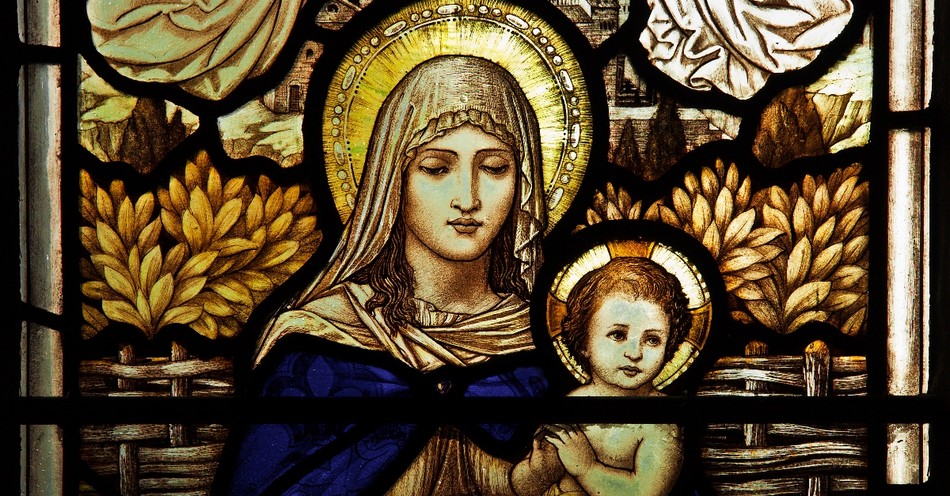
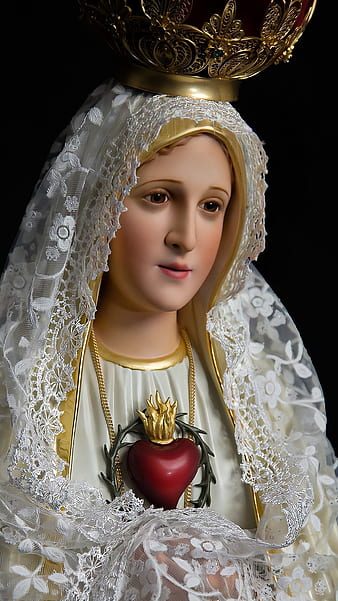
Mary's Role in the Life of the Church
Updated at: 2023-08-05 13:19:27 (3 years ago by Melkisedeck Leon Shine)
๐นMary's Role in the Life of the Church๐น
Mary, the beloved Mother of God, holds a very special place in the life of the Church. Her significance cannot be understated, as she occupies a central role in the spiritual journey of every Christian. Let us explore the multifaceted aspects of Mary's role within the Church and how she continues to inspire and guide us today.
1๏ธโฃ Mary's Immaculate Conception: From the moment of her conception, Mary was preserved from the stain of original sin. This unique privilege granted to her by God shows her special role as the vessel through which Jesus would enter the world. As stated in the Catechism of the Catholic Church, "The most Blessed Virgin Mary was, from the first moment of her conception, by a singular grace and privilege of Almighty God and by virtue of the merits of Jesus Christ, Savior of the human race, preserved immune from all stain of original sin" (CCC 491).
2๏ธโฃ Mary's "Yes" to God: Mary's unwavering faith and obedience to God's will are exemplary. When the angel Gabriel appeared to her, Mary selflessly accepted her role as the Mother of God by saying, "Behold, I am the handmaid of the Lord; let it be done to me according to your word" (Luke 1:38). Her willingness to fulfill God's plan serves as an inspiration for all believers to submit to His will with humility and trust.
3๏ธโฃ Mary, Mother of Jesus and the Church: As the Mother of Jesus, Mary holds a unique position as the Mother of the Church. At the foot of the cross, Jesus entrusted His beloved disciple, John, and all of humanity to the care of His Mother. Through this act, Jesus established a spiritual bond between Mary and the Church, emphasizing her role in our lives as our spiritual mother. Just as Mary cared for Jesus during His earthly life, she continues to intercede for us and guide us on our journey towards salvation.
4๏ธโฃ Mary, the Mediatrix of All Graces: The Catholic Church teaches that Mary, as the Mother of God, plays a vital role in the distribution of God's graces to His people. Through her intercession, Mary continuously brings our prayers and petitions before her Son. This belief is deeply rooted in biblical and historical evidence, as exemplified in the wedding at Cana when Mary implored Jesus to perform His first public miracle (John 2:1-11). Mary's intercession led to the turning of water into wine, a sign of the abundant graces poured out upon us through her motherly care.
5๏ธโฃ Mary's Assumption: The Assumption of Mary, body and soul, into Heaven is a dogma of faith in the Catholic Church. This teaching affirms that, at the end of her earthly life, Mary was taken up to Heaven by God's power. The Church's belief in the Assumption underscores Mary's unique role in salvation history and her intimate union with her Son. It also serves as a reminder of the glory that awaits all faithful souls who persevere in their journey towards God.
In conclusion, Mary's role in the life of the Church is profound and encompasses various aspects. She is the Immaculate Conception, the humble servant who said "Yes" to God's plan, the Mother of Jesus and the Church, the Mediatrix of All Graces, and the Assumed Queen of Heaven. Her unwavering faith, love, and intercession continue to inspire and guide Christians worldwide. Let us honor our beloved Mother Mary and seek her intercession in our journey of faith.
What are your thoughts on the role of Mary in the life of the Church? How has she impacted your spiritual journey? ๐น
Updated at: 2023-08-05 13:20:24 (3 years ago by Melkisedeck Leon Shine)
Mary, Our Advocate in Times of Spiritual Warfare ๐๐น
The role of Mary, the Mother of God, as our advocate in times of spiritual warfare is a topic that holds great significance in the hearts of many Christians. ๐โจ
As Roman Catholics, we have a deep devotion and love for Mary, recognizing her as the perfect example of faith and obedience to God. ๐๐๏ธ
Throughout the Bible, we can find numerous examples of Mary's intercession and protection in times of spiritual battle. One such instance can be found in the wedding at Cana, where Mary intercedes on behalf of the bride and groom when they run out of wine. Her simple request to Jesus results in the first public miracle, demonstrating her role as our advocate and intercessor. (John 2:1-11) ๐ท๐
The Catechism of the Catholic Church teaches us that Mary's role as our advocate is rooted in her unique relationship with Jesus as His mother. She is the "Mother of the Church" and the "Mother of all the living" (CCC 963). Her maternal intercession is a powerful weapon in our spiritual battles. ๐นโ๏ธ
Throughout history, countless saints have attested to the efficacy of Mary's intercession in times of spiritual warfare. Saint Maximilian Kolbe, a martyr of Auschwitz, had a deep devotion to Mary and relied on her maternal protection in the darkest moments of his life. ๐โช
Mary's role as our advocate is beautifully expressed in the Hail Holy Queen prayer, where we implore her intercession, saying, "Turn then, most gracious advocate, thine eyes of mercy toward us" ๐น๐
Furthermore, in the book of Revelation, we find a powerful image of Mary as the woman clothed with the sun, with the moon under her feet, and a crown of twelve stars on her head. This image speaks of her victory over evil and her role as the Queen of Heaven and Earth. (Revelation 12:1) ๐๐โ๏ธ
Mary's example of faith and obedience is a source of inspiration for us in times of spiritual warfare. Just as she said "yes" to God's plan for her life, we too can find strength in surrendering our own will to God's divine providence. ๐๐
In times of spiritual battles, it is essential to remember that Mary is always there to assist us. We can turn to her in prayer, asking for her intercession and guidance. ๐น๐ฟ
The Rosary, a powerful prayer devoted to Mary, is a spiritual weapon that has been used for centuries to combat the forces of evil. Through the repetition of Hail Marys, we invite Mary to intercede for us and protect us in our spiritual battles. ๐ฟ๐น
It is important to remember that devotion to Mary does not detract from our relationship with Jesus. Rather, it enhances it. Mary always directs us towards her Son, saying, "Do whatever he tells you" (John 2:5). Her role as our advocate is to bring us closer to Jesus and to help us grow in holiness. ๐น๐๏ธ
As we face the challenges of spiritual warfare, we can seek Mary's intercession by praying the Memorare, a prayer that acknowledges her as our advocate and asks for her help in times of need. ๐๐น
The Memorare prayer beautifully expresses our trust in Mary as our advocate, saying, "Remember, O most gracious Virgin Mary, that never was it known that anyone who fled to your protection, implored your help, or sought your intercession was left unaided." ๐น๐
Our devotion to Mary as our advocate in times of spiritual warfare is a personal choice, rooted in our faith and love for her. It is a source of comfort and strength, knowing that we have a heavenly mother who cares for us and intercedes for us before the throne of God. ๐๐
In conclusion, Mary, Our Advocate in Times of Spiritual Warfare, is a powerful and necessary support in our Christian journey. Her intercession, as witnessed in the Bible, the Catechism of the Catholic Church, and the testimonies of saints, is a reminder of her deep love for us and her desire to protect us in times of spiritual battle. Let us turn to Mary with confidence and trust, seeking her intercession and guidance, knowing that she is always there for us, leading us closer to her Son, Jesus Christ. ๐น๐
What are your thoughts on the role of Mary as our advocate in times of spiritual warfare? How has she interceded for you in your own life? ๐๐น๐
Updated at: 2025-06-23 11:41:09 (1 year ago by Melkisedeck Leon Shine)
Mary's Intercession: A Theological Exploration of Grace and Mediation
Introduction
Within the framework of Catholic theology, the concept of mediation plays a significant role in understanding the relationship between humanity and the divine. This article explores the theological significance of Mary's intercession, examining its basis within established doctrines and its practical application in the lives of believers. Key concepts such as mediation, intercession, and grace will be defined and applied to illustrate Mary's role as a conduit to divine grace. Mediation, in this context, refers to Maryโs act of presenting the needs and prayers of humanity to God. Intercession denotes the act of pleading on behalf of another. Grace, within Catholic theology, signifies God's unmerited favor and transformative power, freely bestowed upon humanity. This exploration will delve into scriptural interpretations, theological traditions, and devotional practices to understand the multifaceted nature of Mary's role in facilitating access to God's grace.
Mary's Unique Position: The Theotokos and Her Maternal Intercession
The foundation of Mary's intercession lies in her unique role as the Theotokos, or "God-bearer," the Mother of God. This title, central to Catholic Christology, signifies her unparalleled relationship with Jesus Christ. Applying the concept of maternal intercession, Mary's role mirrors that of a mother interceding for her child. Her intimate connection with Christ grants her a unique position to advocate for humanity's needs before God. This maternal bond doesn't diminish Jesus's divinity or efficacy of personal prayer, but instead presents a powerful image of divine compassion and accessibility, aligning with the concept of divine kenosis (self-emptying) in the Incarnation. This intimate connection is further emphasized by applying the relational model of the Trinity; Maryโs relationship with Jesus allows her to draw humanity into closer communion with the Father and the Holy Spirit.
Mary's Humility: A Model for Spiritual Growth
Mary's unwavering humility, exemplified in her "Fiat" ("Let it be to me according to your word," Luke 1:38), serves as a paradigm for surrendering to God's will and accepting divine grace. Applying the virtue ethics framework, Mary's humility demonstrates the power of self-emptying and receptivity to Godโs plan. This attitude is crucial for receiving grace, as pride can often hinder one's ability to accept God's gifts. This humility is not passivity, but rather a recognition of Godโs sovereign power, coupled with an active willingness to cooperate in Godโs plan, demonstrating a strong application of the concept of synergy between divine grace and human cooperation.
Scriptural Examples: The Wedding at Cana and the Paradigm of Intercession
The Wedding at Cana (John 2:1-11) serves as a prominent example of Mary's intercession. Her request to Jesus, "They have no wine," demonstrates her proactive role in addressing human needs. This event showcases how Mary intercedes for the needs of humanity, not through altering God's will, but by presenting the needs of others to her Son and initiating God's gracious response. Analyzing this miracle from a narrative perspective highlights the importance of Mary's role in revealing Godโs compassion, while simultaneously underscoring the power of intercession as a catalyst for divine action.
Devotional Practices: The Rosary as a Means of Spiritual Connection
The Rosary, a traditional Catholic devotion, utilizes Mary as a focal point for meditative prayer. Each Hail Mary is an invocation of Mary's intercession and a reflection on the life of Christ. Using a sociological lens, the practice of the Rosary illustrates how collective ritualistic practices can foster community, strengthen faith, and reinforce the belief in Mary's powerful intercession and its role in facilitating a deeper spiritual connection with Christ.
Mary as a Symbol: The New Ark of the Covenant
Mary is often viewed as the New Ark of the Covenant, symbolically carrying the presence of God. This analogy connects the Old Testament's symbol of God's presence with the New Testament's reality of the Incarnation. Applying symbolic interpretation, Mary embodies the fulfillment of the Old Testament promises, representing the dwelling place of Godโs grace among humanity. This conceptualization of Mary's role is not literal, but symbolic, and points to her role in mediating the divine presence to humanity.
The Witness of Saints: Testimonies to Mary's Intercession
Numerous saints throughout history have testified to the power of Mary's intercession. These testimonies, though anecdotal, provide evidence of the profound impact of Maryโs mediation in believers' lives. Viewed through the lens of hagiography and spiritual history, the shared experiences of saints point to the consistently observed effects of Maryโs intercession and their lived-out faith.
Marian Apparitions: Messages of Hope and Guidance
Approved Marian apparitions, such as those at Lourdes and Fatima, often feature messages emphasizing prayer, repentance, and devotion to Mary. From a religious studies perspective, these apparitions, while requiring careful discernment, can be seen as reinforcing Mary's ongoing role as a messenger of God's grace and a guide towards spiritual transformation. The psychological impact of these apparitions on individuals provides further insights into the power of faith and the role of Mary in mediating God's presence and messages to believers.
The Assumption and Heavenly Intercession
The dogma of the Assumption (Mary's bodily ascension to heaven) signifies her ultimate glorification and continued intercession from heaven. Applying theological principles of the communion of saints, Maryโs presence in heaven demonstrates the ongoing nature of her mediation and her ability to continue her intercessory role for humanity. The Assumption transcends earthly limitations and highlights the eternal nature of Maryโs relationship with God and her continued advocacy for believers.
Mary's Role in the Mystical Body of Christ
Catholic theology describes Mary as the model of the Church, and her role as the spiritual mother of all believers strengthens the concept of Mary as intercessor. This framework positions Mary as a vital figure in the Mystical Body of Christ, offering spiritual guidance and interceding for believers in their journey towards Godโs grace. Her role within this framework enhances the concept of spiritual motherhood, drawing parallels to the supportive role of mothers in the earthly realm.
The Power of Prayer and the Efficacy of Intercession
The power of Mary's intercession is rooted in her profound relationship with Jesus. Drawing on the concept of sacramental theology, prayer to Mary is seen not as bypassing Christ, but rather as using a divinely ordained conduit to receive God's grace. The efficacy of prayer through Mary's intercession highlights Godโs generosity and accessibility.
Conclusion and Recommendations
This exploration of Mary's intercession reveals a multifaceted theological concept deeply embedded in Catholic tradition. Maryโs role is not one of co-redemption, but rather of exemplary faith, powerful intercession, and guiding example. Further research could explore the comparative analysis of Marian devotion across various Christian denominations, and investigate the psychological and sociological impacts of Marian devotion on individual believers and communities. Understanding Mary's intercession requires a careful examination of scriptural passages, theological doctrines, devotional practices, and the historical context of her role in the Christian faith. The theological significance of Mary's intercession emphasizes her role as a model of faith, humility, and devotion, while her position as Mother of God provides a powerful framework for understanding her role as a compassionate intercessor, leading believers closer to God's grace. The efficacy of her intercession highlights the boundless nature of God's love and the richness of a relationship grounded in faith and devotion.
Reader Pool: Considering the diverse perspectives within Christianity, how might different theological interpretations of Mary's role impact the understanding and acceptance of her intercession?

Updated at: 2023-08-05 13:19:35 (3 years ago by Melkisedeck Leon Shine)
Devotion to Our Lady of Guadalupe: Patroness of the Americas ๐น
๐ฟ As a devoted Christian Roman Catholic, it brings me great joy to express my deep love and reverence for the Blessed Virgin Mary, particularly in her title as Our Lady of Guadalupe, the Patroness of the Americas. This devotion holds a special place in the hearts of millions, not only in Mexico but also across the entire continent. Let us explore the reasons why this devotion is so cherished and why we should turn to Our Lady of Guadalupe in times of need and thanksgiving.
A Miraculous Appearance ๐ The devotion to Our Lady of Guadalupe originates from the miraculous apparition of the Blessed Virgin Mary to Saint Juan Diego in 1531. She appeared to him on Tepeyac Hill near Mexico City, leaving an imprint of her image on his cloak, known as a tilma. This image has since been preserved and is venerated in the Basilica of Our Lady of Guadalupe.
Mother of All Peoples ๐ฉโ๐งโ๐ฆ Our Lady of Guadalupe is often referred to as the Mother of All Peoples, symbolizing her universal motherhood. Just as a loving mother cares for and protects her children, Mary intercedes for all people, regardless of their nationality or race. She epitomizes the unity and love that should be shared among all nations in the Americas and beyond.
A Sign of Hope ๐๏ธ Mary's apparition to Saint Juan Diego brought hope to a people in need. The native Aztec people were undergoing a period of great suffering and spiritual darkness. However, through her presence and message, Mary offered them comfort, healing, and a renewed sense of faith. This serves as a reminder that no matter how challenging our own circumstances may be, Our Lady of Guadalupe is there to guide and console us.
A Symbol of Conversion ๐ฟ The apparition of Our Lady of Guadalupe led to the conversion of millions of indigenous people to Christianity. This event was a powerful demonstration of Mary's intercession and her ability to bring people closer to her Son, Jesus Christ. Through her gentle and loving presence, she showed the Aztec people, and all of us, the path to salvation and eternal life.
A Message of Love โค๏ธ Mary's message to Saint Juan Diego was one of love and compassion. She said, "Am I not here, I who am your Mother? Are you not under my shadow and protection?" These words remind us that Mary is always present, ready to offer her love and protection to those who turn to her. She is truly our Mother, guiding us and caring for us along our spiritual journey.
Embracing Cultural Identity ๐บ The devotion to Our Lady of Guadalupe beautifully combines the Catholic faith with the rich indigenous culture of Mexico. The image of Our Lady of Guadalupe on the tilma incorporates elements that were meaningful to the Aztec people. This integration of cultures is a testament to the Church's approach to embracing and respecting different traditions and fostering unity among diverse communities.
The Woman Clothed in the Sun โ๏ธ In the Book of Revelation, Chapter 12, there is a vision of a woman clothed with the sun, with the moon under her feet and a crown of twelve stars on her head. Many Catholics believe that this woman represents Mary, who appeared as Our Lady of Guadalupe, fulfilling this biblical prophecy. It further emphasizes the significance of this devotion and Mary's role as a powerful intercessor.
A Call to Holiness ๐ Our devotion to Our Lady of Guadalupe is not just about venerating an image or seeking favors. It is an invitation to imitate Mary's virtues and strive for holiness in our own lives. Mary's humility, obedience, and unwavering faith serve as a model for all Christians, reminding us of the importance of living out our faith daily.
Protection in Times of Trial โ๏ธ Throughout history, Our Lady of Guadalupe has been seen as a source of protection and refuge in times of great distress. Just as she offered solace to the Aztec people, she continues to offer comfort to her children today. By turning to her in prayer, we can find strength and peace in the midst of our own trials and tribulations.
A Pilgrimage Destination โ๏ธ The Basilica of Our Lady of Guadalupe in Mexico City is one of the most visited Catholic pilgrimage sites in the world. Millions of people from all corners of the globe make the journey to honor Our Lady of Guadalupe and offer their prayers and petitions. This pilgrimage is not only a physical journey; it is also a spiritual one, allowing believers to deepen their relationship with Mary and seek her intercession.
Patroness of the Americas ๐ Our Lady of Guadalupe holds a special place in the hearts of all those who reside in the Americas. As the Patroness of the Americas, she watches over and intercedes for the entire continent, encompassing North, Central, and South America. This title reminds us of Mary's universal motherhood, her love for all people, and her desire to bring us closer to her Son.
A Call to Unity ๐ค In a world often plagued by division and discord, the devotion to Our Lady of Guadalupe serves as a reminder of the importance of unity and peace. Mary's message of love and her desire to bring all people together should inspire us to work towards reconciliation and harmony in our relationships, communities, and nations.
Pope John Paul II's Devotion ๐ Pope John Paul II had a deep devotion to Our Lady of Guadalupe, considering her as the "Star of the New Evangelization." During his papacy, he visited the Basilica of Our Lady of Guadalupe multiple times and even declared Saint Juan Diego a saint in 2002. His example encourages us to embrace this devotion and seek the intercession of Our Lady of Guadalupe in our own lives.
A Pilgrimage of the Heart ๐ While not everyone may have the opportunity to physically visit the Basilica of Our Lady of Guadalupe, we can embark on a pilgrimage of the heart by deepening our devotion to Mary. Praying the Rosary, attending Mass, and consecrating ourselves to her are all ways in which we can express our love and seek the intercession of Our Lady of Guadalupe.
Your Thoughts? ๐ญ What are your thoughts on the devotion to Our Lady of Guadalupe? Have you experienced her intercession in your own life? Share your thoughts and experiences below. May we all turn to Our Lady of Guadalupe with love and trust, knowing that she is always there to guide and protect us on our journey of faith. ๐น๐
Updated at: 2025-07-01 10:16:31 (1 year ago by Melkisedeck Leon Shine)
Article Title: Mary: A Marian Christological Approach to Navigating Life's Adversities
Introduction: This article explores the multifaceted role of Mary, the mother of Jesus, within Roman Catholic theology and its practical application in navigating life's challenges. We will examine Marian doctrines and their implications for spiritual growth, drawing upon relevant theological concepts and models such as the concept of intercession, the role of the Blessed Virgin Mary as a model of faith, and the significance of Marian devotions. The discussion will employ a Christocentric lens, understanding Mary's significance primarily through her relationship with Jesus Christ and her role in salvation history. Key concepts, such as intercession, the Immaculate Conception, and the Assumption, will be defined to provide a clear theological framework.
Mary's Christological Significance and Spiritual Modeling: Mary's unique position as the Theotokos (God-bearer) is foundational to Catholic theology. Her unwavering faith and obedience, as depicted in the biblical narratives, serve as a powerful model for believers. This resonates with the concept of kenosis (self-emptying), exemplified by Christ's humility, and reflected in Mary's complete surrender to God's will. Her life, from the Annunciation to the crucifixion, illustrates the process of accepting God's plan even amidst suffering, providing a powerful example of faith and trust in the face of adversity. This aligns with the virtue ethics model, where Mary embodies cardinal virtues like faith, hope, and charity.
Marian Intercession and its Theological Basis: The Catholic Church's doctrine of Marian intercession posits that Mary, having achieved union with God, continues to intercede for humanity. This is not seen as a bypass of Christ, but rather a participation in the communion of saints. Her intercession is grounded in the belief in the unity and interconnectedness of the Church, both earthly and heavenly, reflecting the ecclesiological understanding of the "mystical body of Christ." Drawing parallels to the sociological concept of social capital, Mary's intercession acts as a bridge, connecting humanity's prayers and needs to God's grace and mercy.
The Rosary: A Contemplative Practice and Spiritual Exercise: The rosary is a powerful devotion that facilitates meditative prayer focused on the life of Christ, seen through the lens of Mary's experience. This practice offers a structured approach to contemplative prayer, contributing to spiritual growth and fostering a deeper relationship with Christ and Mary. This aligns with the pedagogical principles of experiential learning; engaging in this practice actively reinforces faith and understanding.
The Dogma of the Immaculate Conception and its Significance: The dogma of the Immaculate Conception proclaims that Mary was conceived without original sin. While this is a unique attribute bestowed upon Mary, it highlights her role as the chosen vessel of God. This does not diminish the universality of human sin but emphasizes God's grace and power. This concept is relevant to the theological understanding of prevenient grace, highlighting God's initiative in human salvation. Her purity serves as an aspirational ideal, encouraging believers to strive for holiness in the midst of imperfection, which supports the concept of sanctification, the ongoing process of becoming holy.
Marian Apparitions: Messages of Hope and Guidance: Throughout history, numerous reported Marian apparitions have conveyed messages of love, repentance, and hope. While the Church scrutinizes such claims, their enduring significance lies in their impact on individual believers and communities. These apparitions offer a powerful symbol of Mary's maternal concern and persistent guidance, providing comfort and encouragement in times of uncertainty and doubt. These can be understood through the lens of social psychology, demonstrating the role of belief, hope, and shared faith in communal resilience.
The Magnificat: A Canticle of Faith and Humility: Mary's Magnificat, a powerful canticle of praise, expresses her profound trust in God's promises. Her humble acceptance of God's plan and her commitment to serving him are exemplary. This aligns with the theological concept of Magnificat theology, emphasizing God's preference for the humble and marginalized. This encourages a posture of gratitude and recognition of God's power in one's own life, fostering a deeper sense of spiritual awareness.
Mary as a Spiritual Mother: Providing Comfort and Guidance: The concept of Mary as a spiritual mother builds upon her role as mother of Jesus and her deep compassion for humanity. This relationship offers comfort, guidance, and encouragement on the spiritual journey. Her maternal love fosters a sense of belonging within the Christian community, building on the ecclesiological understanding of the Church as a family. This demonstrates the power of empathetic mentorship and pastoral care.
The Assumption and its Eschatological Significance: The dogma of Mary's Assumption, declaring her bodily ascension into heaven, signifies the victory of Christ over death and the ultimate hope of resurrection. This offers an eschatological perspective on the Christian life, highlighting the promise of eternal life with God. Applying the concept of hope in psychology, this belief encourages endurance in the face of suffering and inspires perseverance in the pursuit of holiness.
Conclusion and Recommendations: This exploration of Mary's role in Catholic theology underscores her profound significance as a spiritual model and intercessor. Her life exemplifies faith, obedience, and unwavering trust in God's plan, even in the face of hardship. Marian devotions, such as the rosary, serve as valuable tools for spiritual growth and contemplative prayer. Further research could investigate the psychological and sociological impacts of Marian devotion on individual well-being and community cohesion. Exploring the cross-cultural expressions of Marian piety and their diverse interpretations could broaden the understanding of Mary's significance in a globalized world. The implications of Mary's role for pastoral care and spiritual direction warrant further examination, particularly in addressing contemporary challenges and needs. Her enduring appeal suggests the need for continued theological reflection on the significance of Marian devotion in enriching the spiritual lives of believers.
Reader Pool: How might a deeper understanding of Marian theology inform and enhance contemporary pastoral practices and approaches to spiritual formation?
Updated at: 2023-08-05 13:20:02 (3 years ago by Melkisedeck Leon Shine)
Mary, Mother of God: An Exemplar of Humility ๐น
๐ In the Christian faith, Mary, the Mother of God, holds a special place in the hearts of believers. Her unwavering faith, humility, and obedience to God's will serve as an inspiration to all Christians.
๐ Mary's humility is evident from the very beginning, when the angel Gabriel appeared to her and announced that she would conceive a child, Jesus, by the power of the Holy Spirit. Instead of boasting or seeking glory, she humbly accepted this divine mission, saying, "Behold, I am the handmaid of the Lord; let it be to me according to your word" (Luke 1:38).
๐ Throughout her life, Mary remained humble, always putting God's will above her own desires. She did not seek recognition or praise for being the mother of the Son of God; instead, she embraced her role with grace and humility.
๐ท One example of Mary's humility can be seen at the wedding feast of Cana (John 2:1-12). When the wine ran out, Mary approached Jesus and simply said, "They have no wine" (John 2:3). She did not demand a miracle or draw attention to herself. Instead, she trusted in her son's divine power and humbly presented the situation to him.
โจ Another powerful example of Mary's humility can be found at the foot of the cross, where she stood with unwavering faith and love for her son. Despite the tremendous pain and sorrow she experienced, Mary did not question God's plan or harbor resentment. Instead, she remained humble, trusting in God's ultimate purpose.
๐ The Catechism of the Catholic Church also highlights Mary's humility, stating, "Mary is the perfect Orans (pray-er), a figure of the Church. When we pray to her, we are adhering with her to the plan of the Father, who sends his Son to save all men. Like the beloved disciple, we welcome Jesus' mother into our homes" (CCC 2679).
๐ Saint Bernard of Clairvaux, a renowned Catholic saint, eloquently described Mary's humility, saying, "Mary is the stairway to heaven; the humblest of creatures, the most high; the most lowly, yet the most exalted; the most hidden, yet the most well known; the most despised, yet the most cherished."
๐น Mary's humility serves as a powerful reminder to all Christians that true greatness lies in humbling ourselves before God. In a world that often values pride and self-promotion, Mary's example calls us to embrace humility as a virtue.
๐ As we reflect on Mary's humility, we can learn to surrender our own will to God's plan and trust in His providence. Like Mary, we are called to say, "Let it be to me according to your word," and entrust ourselves fully to God's loving care.
๐ท Mary's humility also teaches us the importance of recognizing that everything we have and are is a gift from God. By humbly acknowledging our dependence on Him, we open ourselves up to His grace and blessings.
๐ Furthermore, Mary's humility invites us to serve others with selflessness and love. As Pope Francis said, "Mary is the one who knows how to welcome the love of God and how to give it. She is the model of how to respond to Godโs call, with joy and courage, saying 'yes' to Him without hesitation."
๐ The Bible tells us that "God opposes the proud, but gives grace to the humble" (James 4:6). Mary's humility allowed her to receive God's grace in abundance and become the Mother of God.
โจ As we contemplate Mary's humble heart, let us strive to imitate her in our own lives. Let us seek to be humble in our thoughts, words, and actions, always putting God and others before ourselves.
๐น In times of success, let us remember to give glory to God, acknowledging that any achievements are His blessings. And in times of difficulty, let us trust in His plan, knowing that He is with us every step of the way.
๐ So, dear reader, what are your thoughts on Mary, Mother of God, as an exemplar of humility? How can we learn from her example and cultivate humility in our own lives? Share your insights and reflections below!
Updated at: 2025-06-20 20:54:19 (1 year ago by Melkisedeck Leon Shine)
Introduction: Defining Key Concepts
This discourse examines the multifaceted role of Mary, the Mother of God, within the Catholic Church, focusing on her significance as a unifying figure. We will explore her theological status, scriptural basis, and the impact of Marian devotion on ecclesial cohesion. Key concepts informing this analysis include ecclesiology (the study of the nature and structure of the Church), Christology (the study of the person and nature of Christ), and Mariology (the theological study of Mary). We will also engage with concepts from social psychology, examining how shared beliefs and practices, such as Marian devotion, contribute to group identity and social cohesion.
Mary's Theological Role and Scriptural Foundation
Catholic doctrine posits Mary's unique role in salvation history, beginning with the Annunciation (Luke 1:26-38). The angel Gabriel's greeting, "Hail, full of grace, the Lord is with you," highlights her privileged status as the Theotokos (God-bearer). This divine election is not merely a historical event but a foundational element of Christology, as Mary's consent to God's plan is inextricably linked to the Incarnation. Her Magnificat (Luke 1:46-55), a hymn of praise reflecting both humility and unwavering faith, further illustrates her integral part in God's redemptive work. Applying the concept of divine agency, we see Mary as a willing participant in the divine plan, instrumental in bringing about the salvation offered through Jesus Christ.
Mary as "Mother of the Church": A Title with Profound Implications
Pope Paul VI's declaration of Mary as "Mother of the Church" in 1964 formalized a long-held belief, highlighting her spiritual motherhood over all believers. This title transcends a merely symbolic designation; it reflects a deep theological understanding of Mary's continued intercession and spiritual guidance for the Church. This concept connects to the sociological principle of social identity theory, where shared beliefs and practices, in this case devotion to Mary, reinforce a sense of belonging and collective identity among Catholics. This role is further explored in the Catechism of the Catholic Church, which emphasizes her unwavering faith and cooperation in God's plan from the Annunciation to the Cross as continuous and vital to the Church's life.
The Unifying Power of Marian Devotion and its Practical Manifestations
Marian devotion, encompassing practices such as the Rosary, the Hail Mary, and May devotions, is a significant aspect of Catholic spirituality. These practices serve not only as expressions of personal faith but also as unifying rituals, strengthening social bonds within the Catholic community. This relates to Durkheim's theory of collective effervescence, where shared religious practices foster a sense of heightened social unity and collective identity. The lives and writings of numerous saints, such as St. Louis de Montfort, further exemplify the profound impact of Marian devotion on spiritual growth and the cultivation of a deeper relationship with Jesus Christ. The emphasis on Mary's role as a model of faith, obedience, and trust provides a powerful ethical and spiritual example for all believers.
Marian Apparitions, the Eucharist, and the Universal Reach of Mary's Influence
Reported Marian apparitions, such as Our Lady of Guadalupe and Fatima, offer another dimension to Mary's role, serving as potent symbols of her continued presence and intercession. These apparitions, while requiring careful discernment, have undeniably shaped the faith and devotion of countless individuals. Furthermore, Mary's profound connection to the Eucharist, the central sacrament of the Catholic faith, underlines her essential role in the ongoing mystery of Christโs presence in the Church. This connection underscores her ongoing participation in the salvific work of Christ and reinforces the unity of faith. Her universal maternal love transcends cultural and geographical boundaries, creating a sense of global unity among Catholics through a shared spiritual connection.
Conclusions and Recommendations
Mary, Mother of the Church, plays a pivotal role in fostering ecclesial unity within Catholicism. Her theological status, grounded in scripture and tradition, combined with the unifying power of Marian devotion, contributes significantly to the sense of collective identity and shared faith among Catholics. Further research should explore the sociological and psychological dimensions of Marian devotion, investigating its impact on social cohesion, religious practice, and individual spiritual development across diverse cultural contexts. The findings could provide valuable insights into the dynamics of religious identity and community formation. In pastoral contexts, promoting Marian devotion as a means of strengthening ecclesial unity and fostering a deeper appreciation of Mary's role in salvation history should remain a priority. The continued theological exploration of Mariology and its implications for contemporary ecclesial life is essential for a richer understanding of the Church's identity and mission.
Reader Pool: Considering the multifaceted theological and sociological dimensions presented, how might a deeper understanding of Mary's role contribute to fostering greater unity and dialogue within and beyond the Catholic Church?
Updated at: 2025-06-05 10:20:22 (1 year ago by Melkisedeck Leon Shine)
This essay explores the multifaceted role of Mary, Mother of Jesus, within Catholic theology and tradition. We will examine key doctrines concerning Mary, analyze their theological implications, and explore their historical impact on Christian spirituality. Central concepts include Mariology (the study of Mary), the Immaculate Conception, the Assumption, and the concept of intercession within a faith-based framework.
The doctrine of the Immaculate Conception, proclaimed dogma in 1854 by Pope Pius IX, asserts that Mary was conceived without original sin. This is not to suggest Mary was sinless during her life, but rather that she was preserved from the inherited stain of sin from the moment of her conception. This theological construct, rooted in the belief in Mary's unique role as the Mother of God, prepares her to be a worthy vessel for the Incarnation. It exemplifies the application of divine grace preceding human action, a key concept within many theological frameworks. From a sociological perspective, this doctrine solidified Mary's position as a pivotal figure within the Catholic Church hierarchy and influenced devotional practices for centuries.
Mary's role in the life of Jesus and the subsequent development of Christianity is undeniable. The Annunciation, as recounted in Luke 1:26-38, presents Mary's humble acceptance of God's will, illustrating the concept of kenosis (self-emptying) in action. Her "fiat" ("let it be"), a moment of profound faith and submission, became a model for Christian discipleship. This narrative highlights the importance of obedience and faith as essential components of a spiritual journey. Biblical accounts like the Wedding at Cana (John 2:1-11), where Mary intercedes with Jesus, further emphasize her role as a mediator between humanity and the divine. This intercessory role exemplifies the concept of divine grace operating through human agency, a common theme in Catholic theology. The event is frequently interpreted through the lens of ecclesiology, demonstrating the supportive nature of the early church.
The Assumption of Mary, another core Marian doctrine, declares that Mary was taken body and soul into heaven. This doctrine, proclaimed dogma in 1950, is understood as a recognition of Maryโs unique relationship with God and her victory over death. This event is profoundly symbolic, representing the ultimate triumph of faith and the anticipation of the resurrection for believers. From a historical perspective, the Assumption's formalization reflects a long-standing tradition of Marian veneration, deeply rooted in popular piety and reinforced by numerous artistic and literary representations.
The concept of Marian intercession is central to Catholic devotion. Mary is frequently invoked as a mediator between humanity and God, offering prayers and requests on behalf of the faithful. The Rosary, a traditional Catholic devotion, focuses on the life of Jesus and Mary, providing a framework for contemplation and prayer. Many individuals attribute miraculous interventions or spiritual guidance to Maryโs intercession, underscoring its significant influence on spiritual lives and personal faith development. This belief system is grounded in the broader theological concept of the Communion of Saints โ the belief that all the faithful, living and deceased, are united in Christ and can assist each other spiritually.
Numerous apparitions attributed to Mary, such as those at Lourdes and Fatima, have profoundly impacted both individuals and communities. These events, often marked by reported healings and profound spiritual experiences, highlight the enduring power of faith and the perceived ongoing presence of Mary within the lives of believers. The socio-psychological effects of these apparitions have been extensively studied, emphasizing the role of faith, hope, and community in shaping individual experiences and collective narratives. Analyzing these events from a sociological perspective often unveils the intricate interplay between social, religious, and psychological factors.
Mary's portrayal in Scripture and tradition underscores her pivotal role in salvation history. Her unwavering faith, profound humility, and unwavering love for her son serve as powerful examples for believers. By studying Mary's life and role, Christians can deepen their understanding of God's grace, the importance of faith, and the role of prayer in spiritual growth. The application of theological concepts like exemplarity, studying the lives of saints for guidance, is central to this process, demonstrating how faith is lived and exemplified throughout history.
This exploration of the Marian paradigm reveals the significant theological, historical, and spiritual impact of Mary, Mother of Jesus, within Catholic tradition. The doctrines surrounding Mary, far from being isolated theological concepts, have shaped devotional practices, artistic expressions, and social structures for centuries. Further research into the socio-historical context of Marian devotion could illuminate the complex relationship between theological doctrines and their impact on culture and society. Additionally, exploring the psychological aspects of Marian piety through empirical studies could contribute to a deeper understanding of its influence on individual faith formation and spiritual well-being. Future studies might consider a comparative analysis of Marian devotion across different Christian denominations, examining variations in theological interpretations and devotional practices.
Reader Pool: Considering the diverse interpretations of Mary's role within Christianity, how might a deeper understanding of Mariology contribute to greater ecumenical dialogue and mutual respect among various faith traditions?
Updated at: 2023-08-05 13:20:17 (3 years ago by Melkisedeck Leon Shine)
Mary, Mother of the Church: A Pillar of Unity
๐ Introduction: Mary, the Mother of God, holds a special place in the hearts of all Christians, especially Roman Catholics. She is not only the mother of Jesus, but also a pillar of unity within the Church. Let us explore the many reasons why Mary is such a beloved figure in Catholicism.
๐ Mary's Role: According to Catholic belief, Mary was chosen by God to be the mother of His Son, Jesus Christ. In Luke 1:28, the angel Gabriel greets her with these words: "Hail, full of grace, the Lord is with you!" This divine intervention demonstrates Mary's unique role in salvation history.
๐ Biblical Examples: Throughout the Bible, we see evidence of Mary's special relationship with God. In Luke 1:46-55, Mary proclaims the Magnificat, a hymn of praise, after receiving the news of her miraculous conception. This beautiful hymn reflects her humility and faith in God's plan.
๐ Mother of the Church: In 1964, Pope Paul VI declared Mary as "Mother of the Church." This title emphasizes her role as a spiritual mother to all believers. Just as she cared for Jesus during his earthly life, Mary continues to intercede for the Church and brings us closer to her Son.
๐ Unity Through Mary: Mary's role as a pillar of unity is seen in her ability to bring people together. She is a source of comfort and solace for those in need, and her intercession is believed to be powerful. As Catholics, we turn to her in times of joy and sorrow, knowing that she understands our struggles.
๐ Catholic Saints: Throughout history, many Catholic saints have expressed their deep devotion to Mary. St. Louis de Montfort said, "The more the Holy Spirit finds Mary, His dear and inseparable spouse, in any soul, the more active and mighty He becomes in producing Jesus Christ in that soul." This shows the profound impact Mary has on our spiritual lives.
๐ Catechism of the Catholic Church: The Catechism teaches us that Mary's role in the Church is not only symbolic but also practical. In paragraph 964, it states, "The Motherhood of Mary in the order of grace continues uninterruptedly from the consent which she loyally gave at the Annunciation and which she sustained without wavering beneath the cross." This highlights her ongoing presence in the life of the Church.
๐น Marian Devotion: Devotion to Mary is an integral part of Catholic spirituality. Praying the Rosary, reciting the Hail Mary, and honoring her during the month of May are just a few ways Catholics express their love for Mary. Through these practices, we deepen our relationship with her and grow in our faith.
๐๏ธ Model of Holiness: Mary's example of holiness is an inspiration to all believers. Her fiat, her "yes" to God's plan, teaches us about obedience and trust. In Luke 1:38, Mary says, "Behold, I am the handmaid of the Lord; let it be to me according to your word." Her unwavering faith serves as a guide for us on our spiritual journey.
๐ Universal Love: Mary's love knows no boundaries. She is truly a mother to all, regardless of race, nationality, or background. In her motherly embrace, we find comfort and acceptance, knowing that she loves us as her own children. Mary's love unites us as one family in Christ.
๐บ Marian Apparitions: Throughout history, there have been numerous accounts of Marian apparitions. From Our Lady of Guadalupe to Fatima, these apparitions serve as reminders of Mary's continued presence in the world. They inspire us to pray and seek her intercession in times of need.
โช Mary and the Eucharist: Mary's connection to the Eucharist, the central sacrament of the Catholic faith, is profound. Just as she carried Jesus in her womb, she carries Him in her heart during each celebration of the Mass. Mary's presence reminds us of the real presence of Christ in the Eucharist.
๐ Final Thoughts: Mary, Mother of the Church, is a true pillar of unity within Catholicism. Her unwavering faith, love, and intercession bring believers together and strengthen our relationship with God. Let us continue to honor and seek the guidance of this beloved figure in our spiritual lives.
๐ Opinion: What are your thoughts on the role of Mary in the Catholic Church? How has she impacted your spiritual journey? Share your thoughts and experiences below.
๐๐น
Updated at: 2023-08-05 13:19:48 (3 years ago by Melkisedeck Leon Shine)
The Holy Family: Mary's Role as Mother and Example ๐๐ช
Introduction: The Holy Family holds a special place in the hearts of Christians worldwide. At its center is the beloved figure of Mary, the Mother of God, who played a crucial role in nurturing and raising Jesus. Let us explore Mary's role as a mother and how she serves as an example for all of us.
Mary's Divine Motherhood: Mary's unique role as the Mother of God sets her apart from any other woman in history. In Luke 1:31-32, the angel Gabriel proclaims, "You will conceive in your womb and bear a son, and you shall name him Jesus. He will be great and will be called Son of the Most High." This divine motherhood highlights Mary's unparalleled closeness to God and her central role in salvation history.
Mary's Exclusive Motherhood: Contrary to some misconceptions, Mary remained a perpetual virgin, dedicating herself entirely to God's plan. The Bible clearly states that Jesus was her only child, as affirmed in Matthew 1:25, "But he had no relations with her until she bore a son, and he named him Jesus." Mary's unique and exclusive motherhood emphasizes her purity and devotion to God.
Mary's Example of Faith: Mary's unwavering faith in God shines through her life, serving as a model for all believers. In Luke 1:38, Mary humbly submits to God's will, saying, "Behold, I am the handmaid of the Lord. May it be done to me according to your word." Her complete surrender to God's plan inspires us to trust in His guidance and embrace our own callings.
Mary's Intercessory Role: As the Mother of God, Mary holds a special place in interceding for us before her Son. In John 2:3-5, Mary's intercession at the Wedding at Cana led to the first public miracle of Jesus, demonstrating her powerful role in our lives. Just as she cared for the needs of the wedding guests, Mary cares for our spiritual needs and intercedes for us in heaven.
Mary's Compassion and Love: Mary's role as a mother extends beyond her relationship with Jesus. Throughout his life, Jesus experienced the love and compassion of Mary, who stood by him even in the most challenging moments. As Christians, we can learn from Mary's unconditional love and emulate her compassion towards others.
The Annunciation: The Annunciation serves as a pivotal moment in Mary's life, as she wholeheartedly accepts God's plan to become the Mother of the Savior. This event showcases her profound humility and willingness to serve. The Catechism of the Catholic Church, paragraph 494, beautifully states, "Called in the Gospels 'the mother of Jesus,' Mary is acclaimed by Elizabeth, at the prompting of the Spirit and even before the birth of her son, as 'the mother of my Lord.'"
Mary's Acceptance of Suffering: Mary's journey as a mother was not without its share of sorrow. Witnessing her Son's crucifixion must have been an unimaginable pain. In John 19:26-27, Jesus entrusts his beloved disciple John to Mary's care, saying, "Woman, behold your son." Even in her agony, Mary demonstrates her strength and motherly love, embracing her role as the spiritual mother of all believers.
Mary's Example of Humility: Mary's humility sets an example for us all. In Luke 1:48, she exclaims, "For he has looked upon his handmaid's lowliness; behold, from now on will all ages call me blessed." Despite her exalted status as the Mother of God, Mary remains humble, acknowledging her dependence on God's grace.
Devotion to Mary: Throughout history, countless saints and theologians have expressed deep devotion to Mary. St. Louis de Montfort once said, "The more the Holy Spirit finds Mary, His dear and inseparable spouse, in any soul, the more active and mighty He becomes in producing Jesus Christ in that soul." This devotion to Mary leads us closer to Jesus, reflecting her role as the spiritual mother of all Christians.
Mary as Our Model: As Christians, we are called to imitate Mary's virtues and seek her intercession. The Catechism of the Catholic Church, paragraph 967, affirms, "By her complete adherence to the Father's will, to his Son's redemptive work, and to every prompting of the Holy Spirit, the Virgin Mary is the Church's model of faith and charity." Mary's example teaches us to embrace God's will, have faith, and show love to others.
Conclusion: Mary's role as a mother and example in the Holy Family is a testament to her unwavering faith, love, and humility. Through her intercession and motherly care, she continues to guide and inspire Christians around the world. Let us reflect on the profound impact Mary had and continues to have on our lives, and strive to follow her example in our own journey of faith.
What are your thoughts on Mary's role as the Mother of God and her example for us? How has she influenced your spiritual journey? Share your opinions and experiences below!